
 Roadside Attraction
White River Narrows
Roadside Attraction
White River Narrows
Basin and Range Monument
Overview

The White River Valley has been home to Native American peoples for millennia. The valley was integral to their hunter-gatherer culture and provided the resources needed to survive and thrive in the arid area known as the Great Basin. Much of the White River Valley is wide and open, however, one short section carves its way through rock creating a cliff lined canyon. This short section, known as the White River Narrows, was clearly an important place for Native American peoples, as they have left petroglyphs and pictographs along its walls.
After the coming of the Euro-American settlers in the 1800s, the Native American peoples left the area. Their rock art remains as a part of their long history and legacy in the area. For those that enjoy visiting and pondering rock art, White River Narrows should be high on your list to visit. The narrows contain hundreds of figures in both the Fremont style or the older hunter-gatherer style.
A few notes on visiting:
- The BLM discusses the sites via the numbers I-VI. I have used the same numbers that they used to reference the sites.
- Visiting requires a high-clearance vehicle or the willingness to walk to a few of the panels. On our visit, we didn’t use 4-wheel drive but had a couple of wash crossing that required high clearance.
- I describe the panels in the order that I think makes the best experience visiting them, but obviously they can be visited in any order.
- You could see all the panels described in an hour if you are hurried, but most will want a half to full day to take in all the amazing art.
Getting There
The trailhead is reached off of NV-318, the state route that connects Crystal Wash in the south to US-6 in the north. From Crystal Wash NV, go north on 318 for about 24 miles to where a dirt road leaves on the right (east) side of NV-318. There is a BLM kiosk just off the highway. Turn off the highway and reset your odometer.
Route Description
Rock art and historic sites are fragile, non-renewable cultural resources that, once damaged, can never be replaced. To ensure they are protected, please:
- Avoid Touching the Petroglyphs: Look and observe, BUT DO NOT TOUCH!
- Stay on the Trails: Stay on the most used trails when visiting sites, and don't create new trails or trample vegetation.
- Photography and Sketching is Allowed: Do not introduce any foreign substance to enhance the carved and pecked images for photographic or drawing purposes. Altering, defacing, or damaging the petroglyphs is against the law -- even if the damage is unintentional.
- Pets: Keep pets on a leash and clean up after them.
- Artifacts: If you happen to come across sherds (broken pottery) or lithics (flakes of stone tools), leave them where you see them. Once they are moved or removed, a piece of the past is forever lost.
From the highway, drive east about 600 ft to the first junction. Go left here, reaching a second junction almost immediately (Jct 1 on the map).
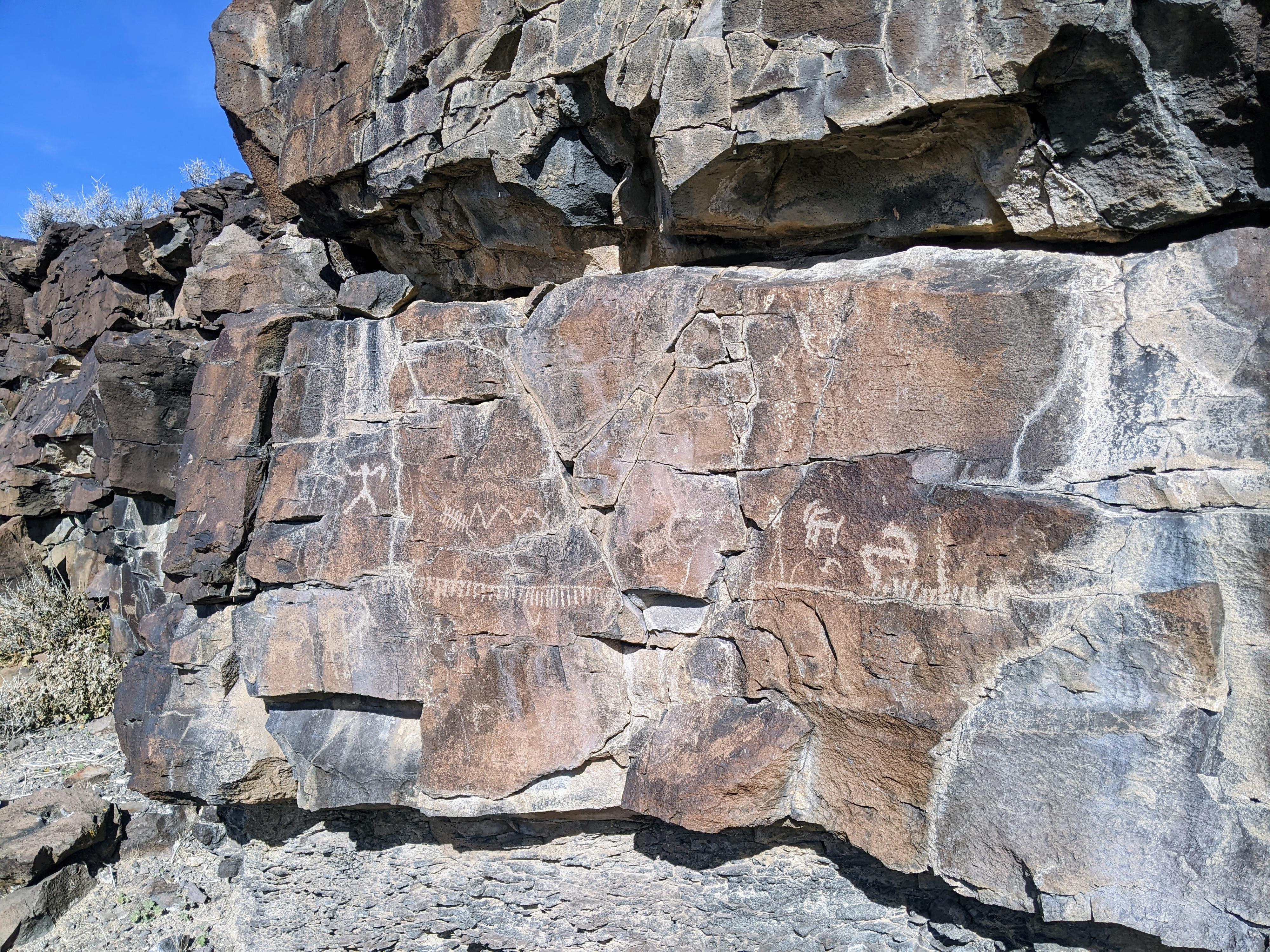
BLM Site 4
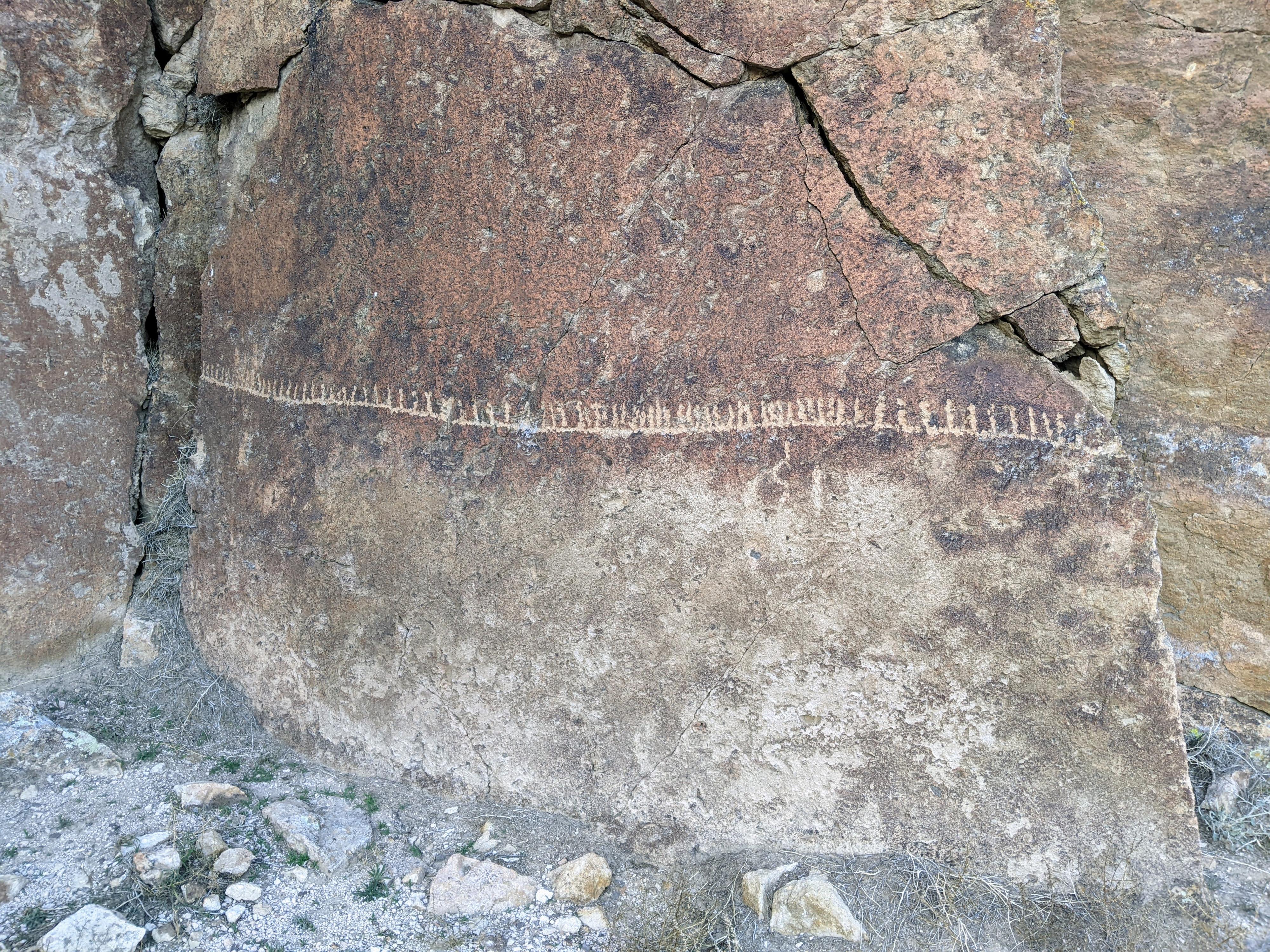
BLM Site 1
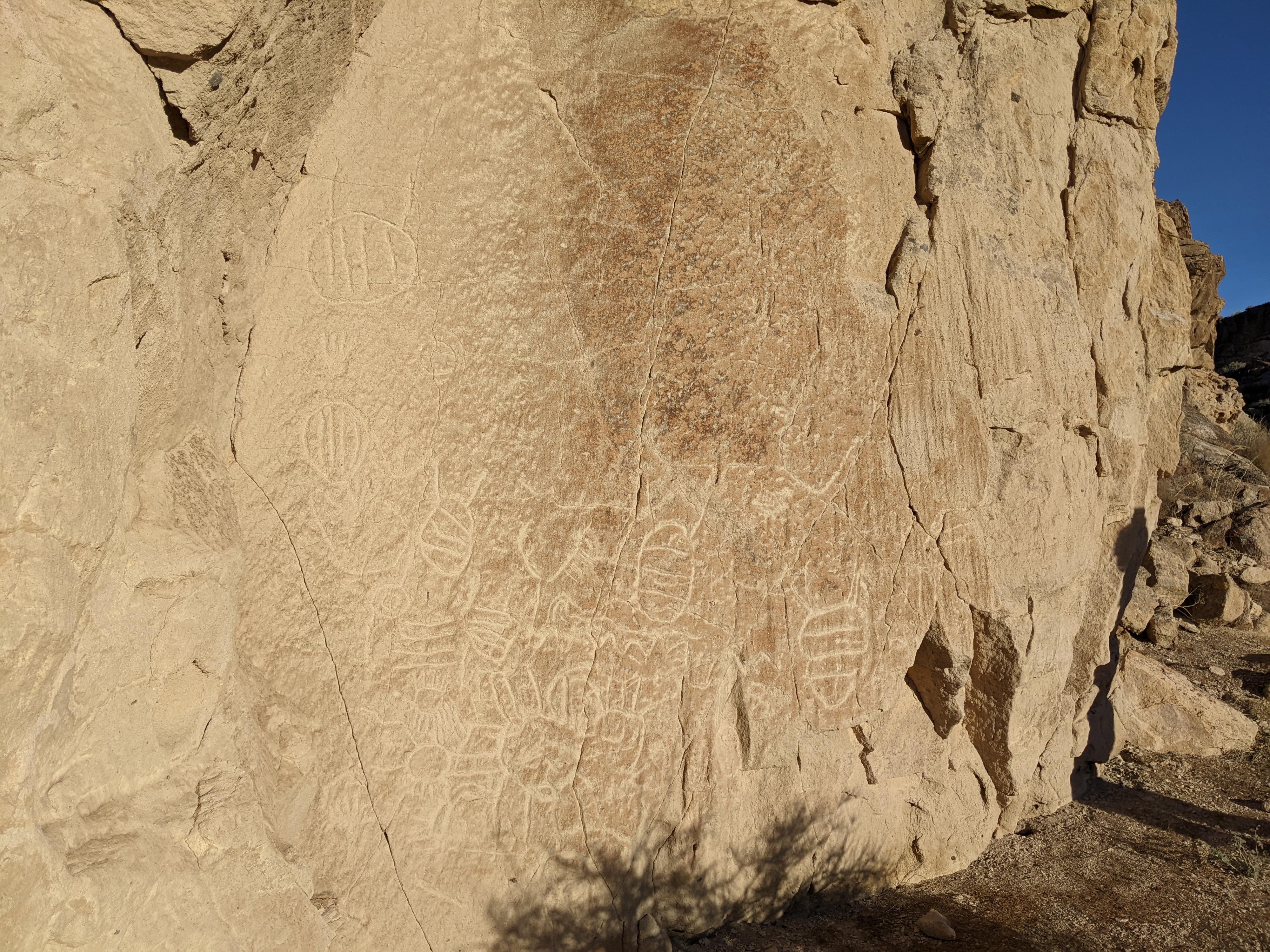
BLM Site 2
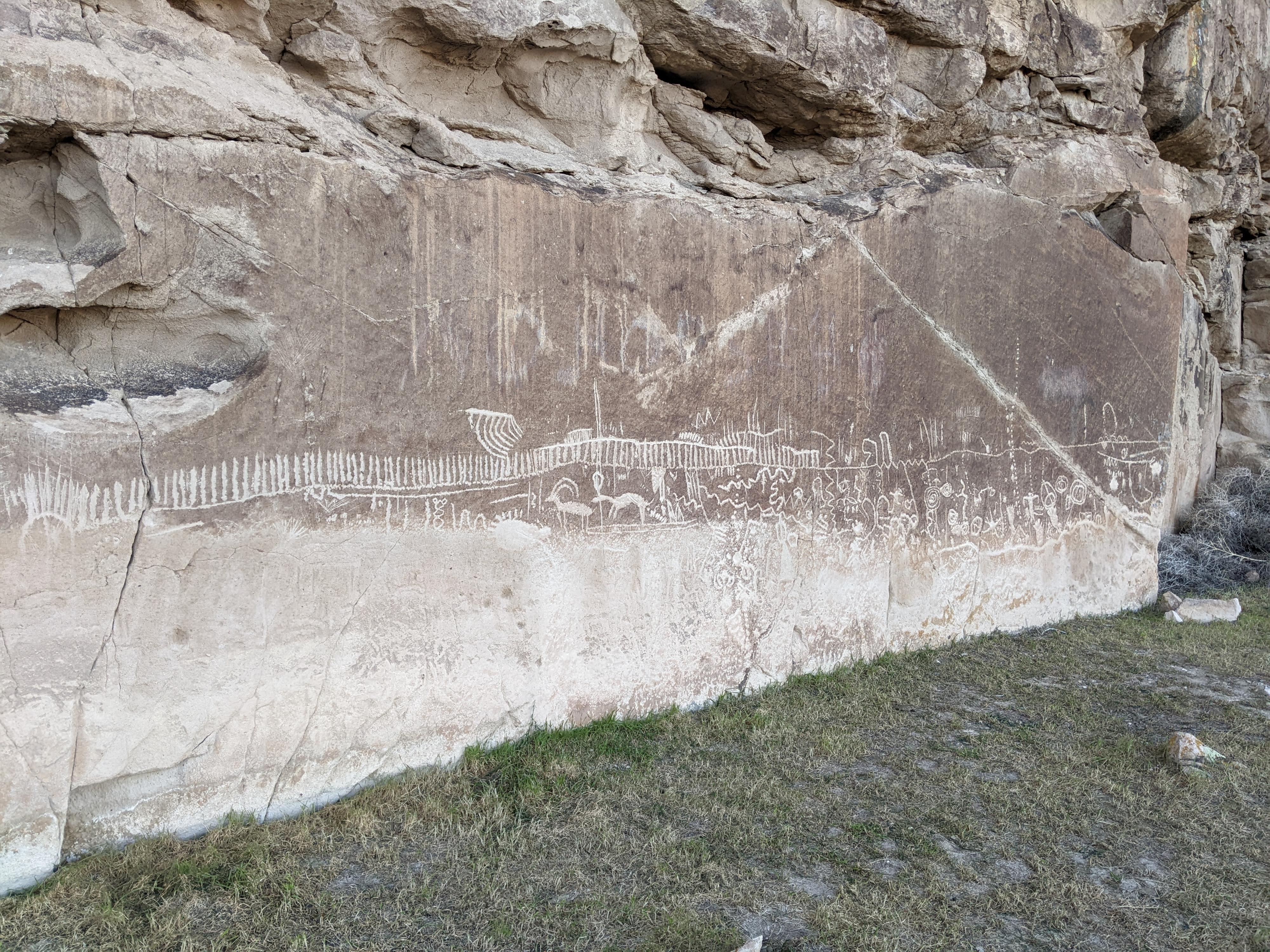
BLM Site 3
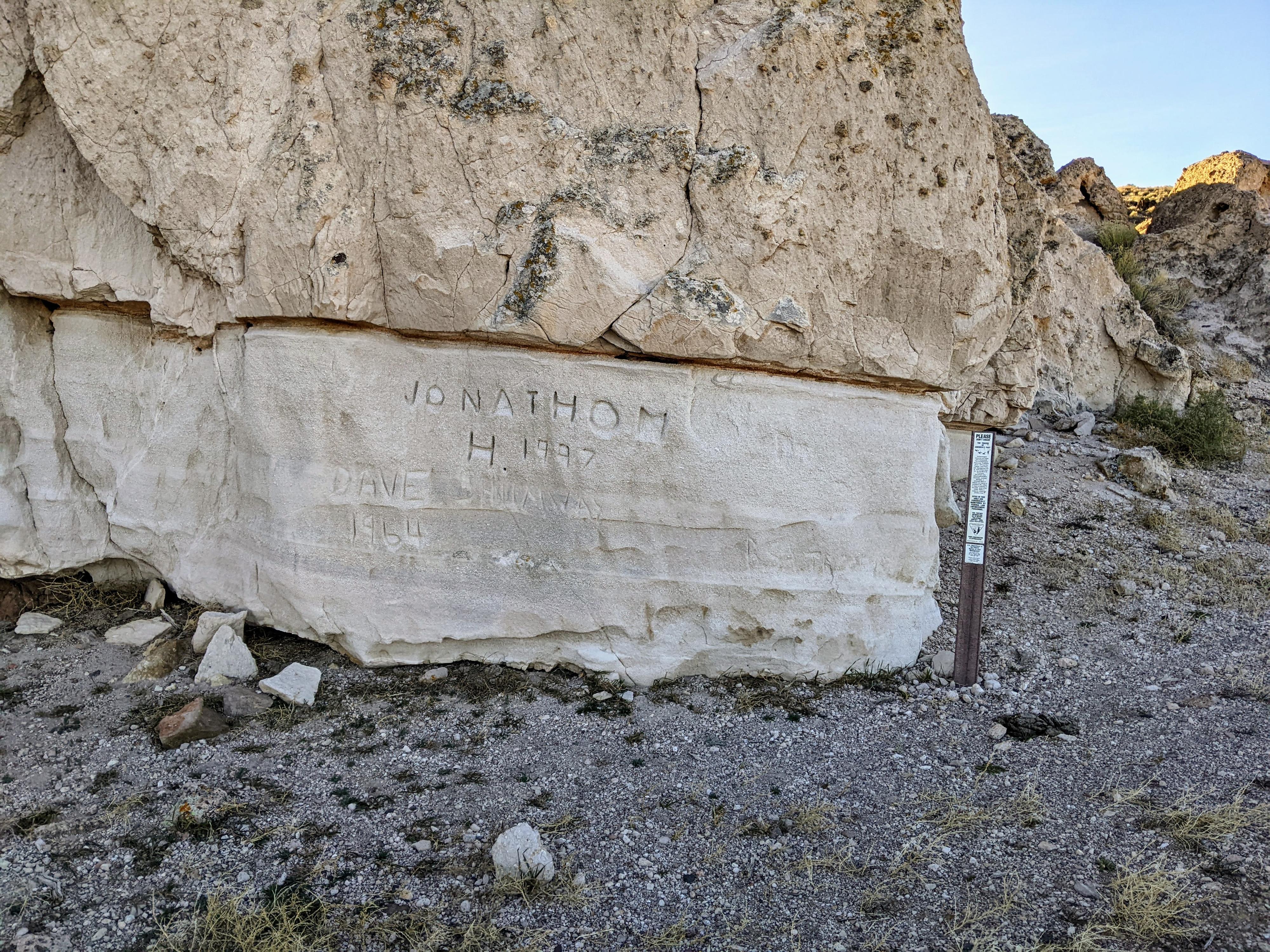
Additional Site
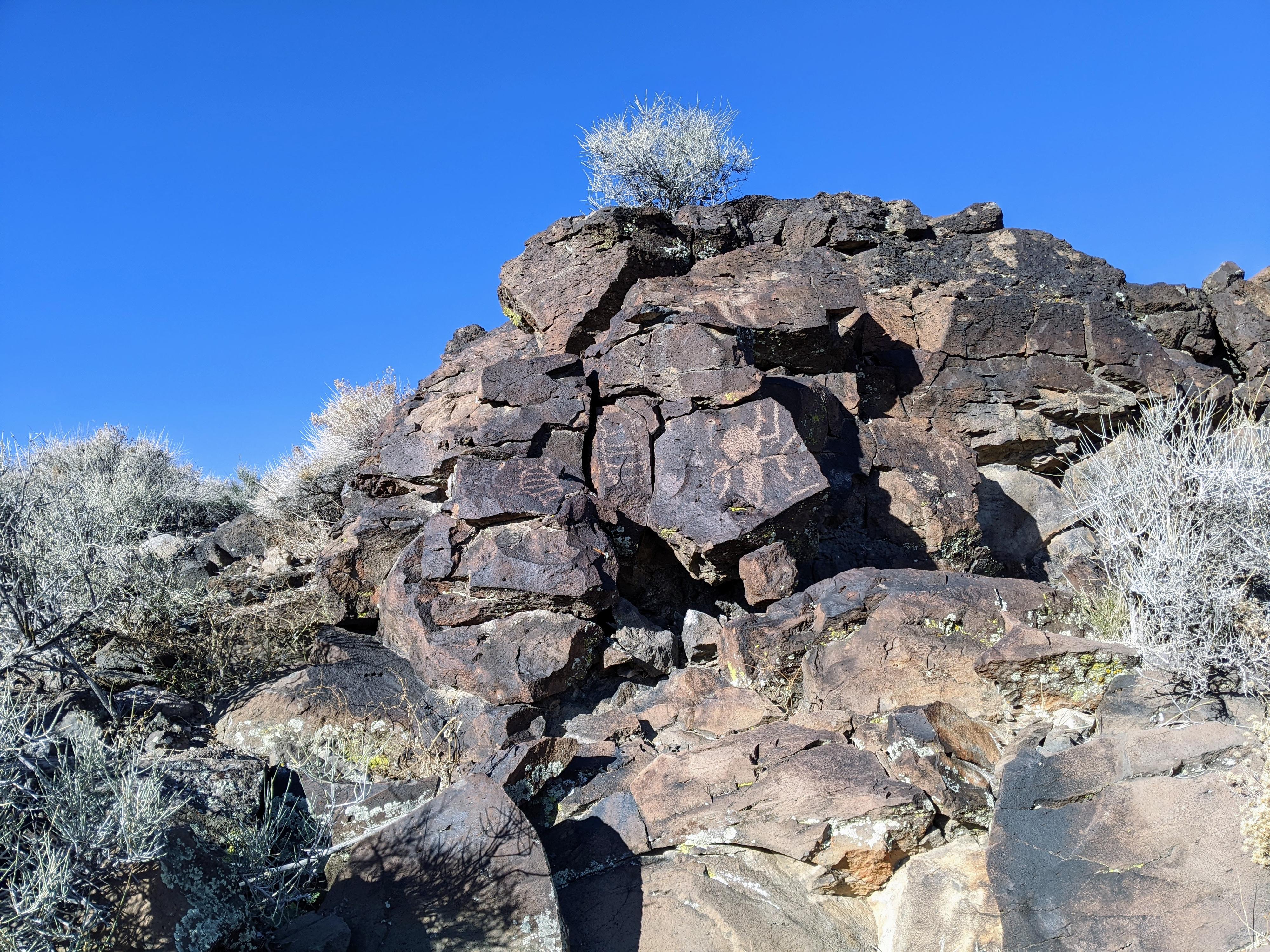
BLM Site 5
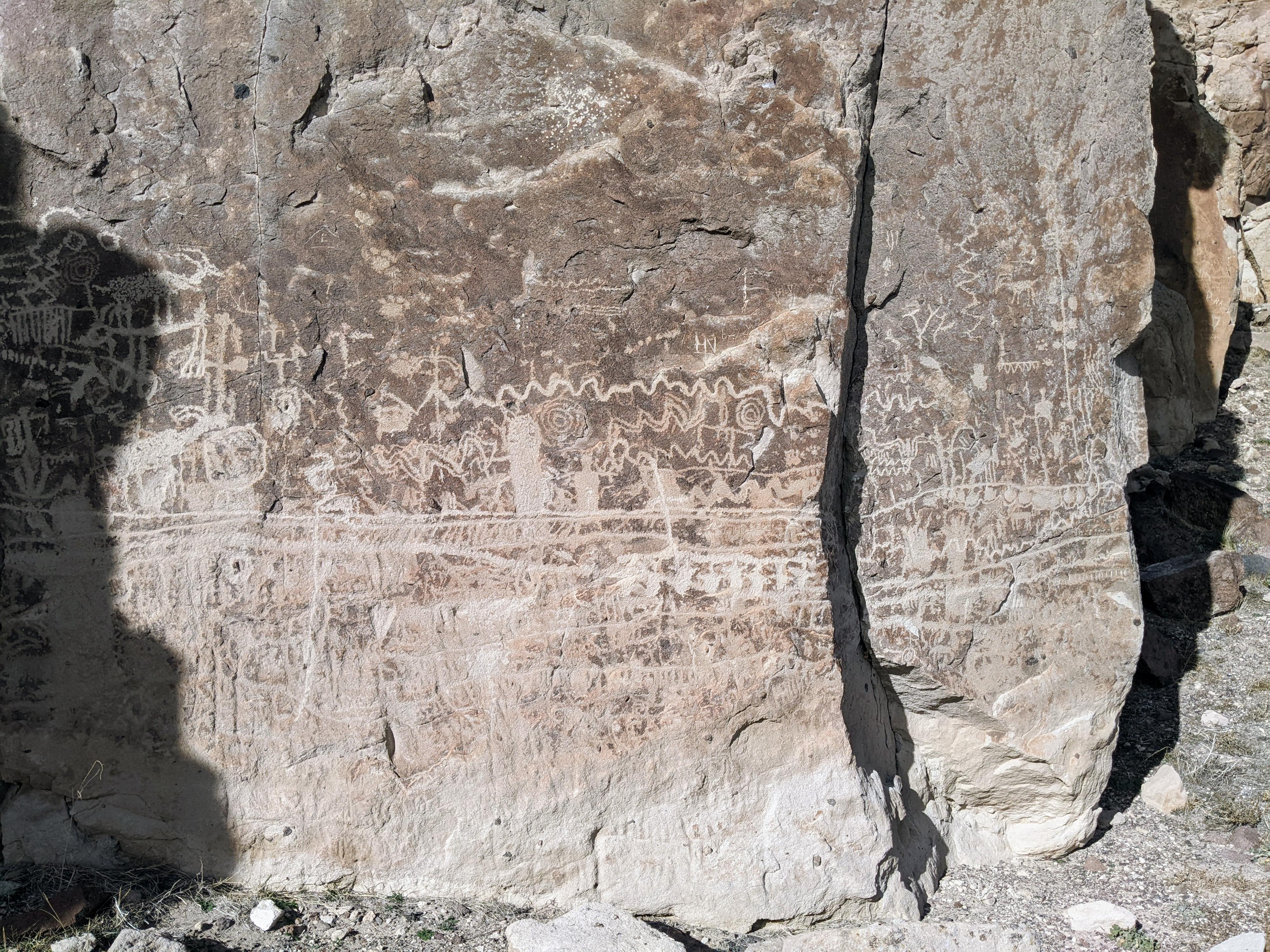
BLM Site 6
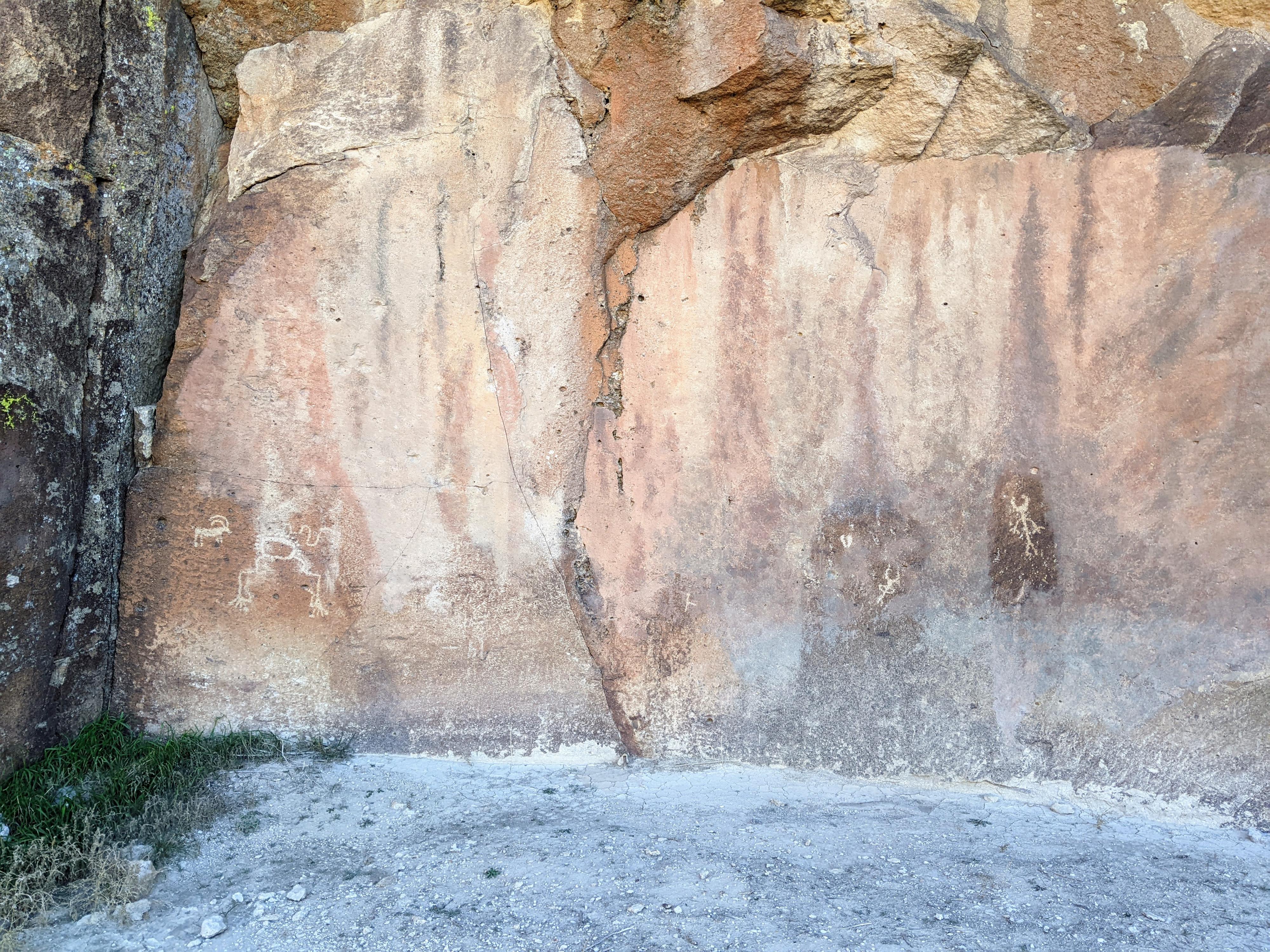
Highway Panel
Maps
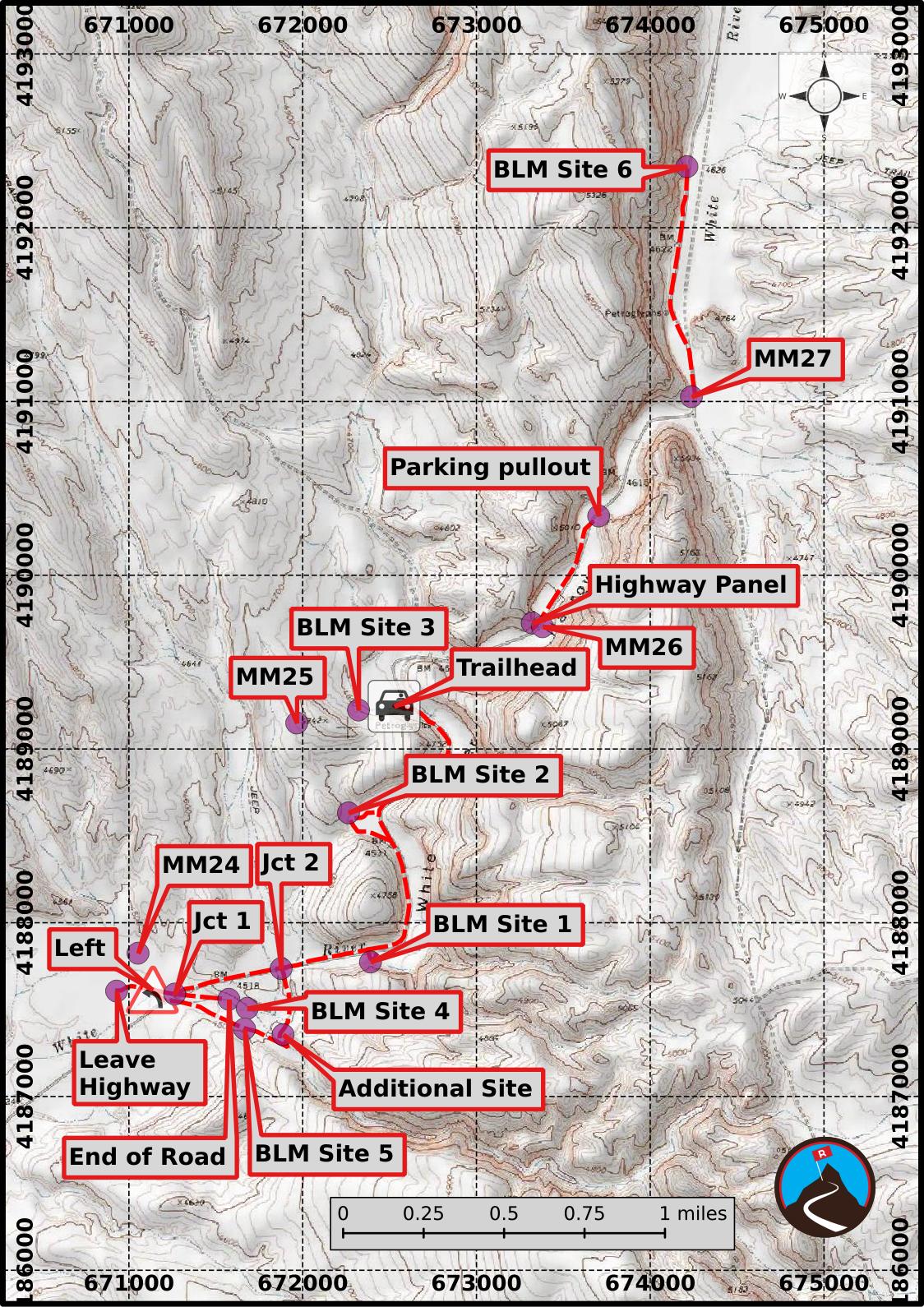
11S 670931E 4187605N
37°49'11"N 115°03'29"W
11S 671137E 4187612N
37°49'12"N 115°03'20"W
11S 671265E 4187587N
37°49'11"N 115°03'15"W
11S 671576E 4187557N
37°49'10"N 115°03'02"W
11S 671682E 4187505N
37°49'08"N 115°02'58"W
11S 671878E 4187734N
37°49'15"N 115°02'50"W
11S 672393E 4187772N
37°49'16"N 115°02'29"W
11S 672265E 4188630N
37°49'44"N 115°02'33"W
11S 671667E 4187387N
37°49'04"N 115°02'59"W
11S 672528E 4189244N
37°50'04"N 115°02'22"W
11S 671889E 4187354N
37°49'03"N 115°02'50"W
11S 672323E 4189222N
37°50'03"N 115°02'30"W
11S 673705E 4190339N
37°50'38"N 115°01'33"W
11S 673323E 4189723N
37°50'19"N 115°01'49"W
11S 674213E 4192349N
37°51'43"N 115°01'10"W
11S 671054E 4187823N
37°49'18"N 115°03'23"W
11S 671968E 4189147N
37°50'01"N 115°02'45"W
11S 673381E 4189702N
37°50'18"N 115°01'47"W
11S 674239E 4191026N
37°51'00"N 115°01'10"W