
 Roadside Attraction
Newspaper Rock
Roadside Attraction
Newspaper Rock
Indian Creek
Overview


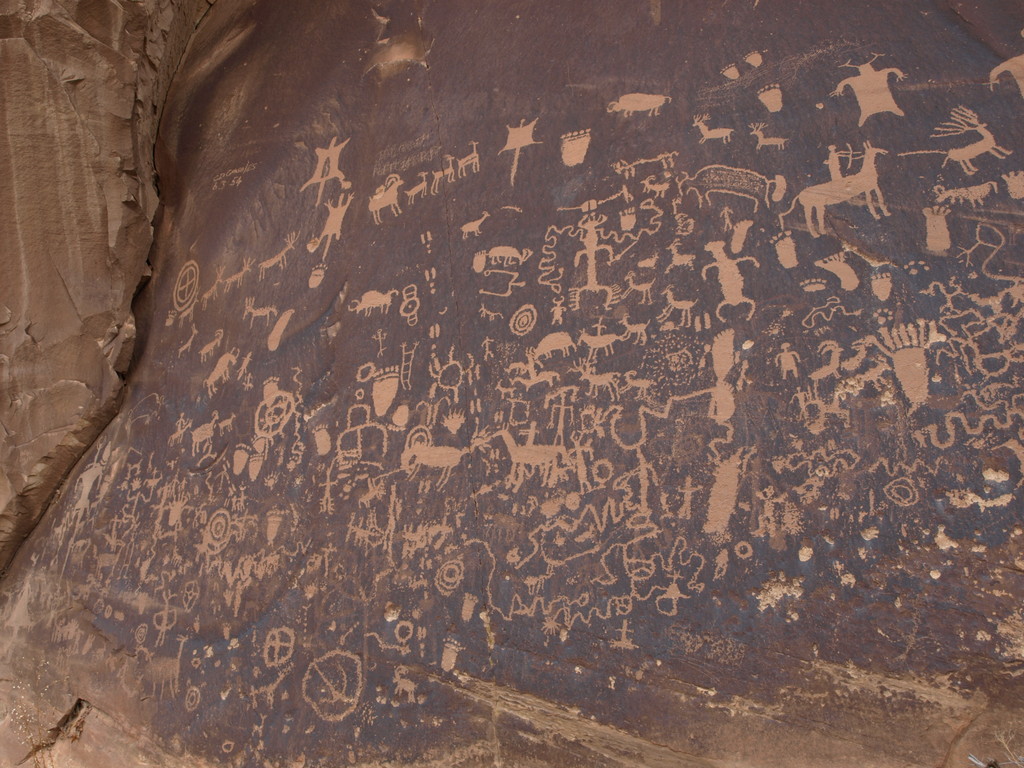
Newspaper Rock, at the entrance to Indian Creek, is a fantastic glimpse into ancient cultures. The rock has petroglyphs dating back about 2000 years, to B.C. times. The panel is a mix of Navajo, Anasazi, and Fremont Indian creation, as well as (unfortunately) a bit of the vandalism of modern man.For the most part, however, they are impeccably preserved and fascinating to visit. This short side trip is highly recommended if passing between Monticello and Moab, and easily enjoyed by all. It goes without saying, but do not touch, or otherwise vandalize the petroglyphs. The petroglyphs are protected under federal law.
The trailhead does not allow camping but does provide a pit toilet.Great primitive camping is available further down the road in Indian Creek proper. This is a crack climbers paradise, so expect to see many climbers on the cliffs along the road during cooler seasons. Seemingly due to it's orientation, the sunsets in Indian Creek are, arguably, some of the best around and not to be missed.
If camping is full, Hamburger Rock, about 20 miles from the highway on the right, generally is less crowded. The road is signed the Lockhart Road, and the camping area is a short distance from the main road.
From the informational sign at the site:
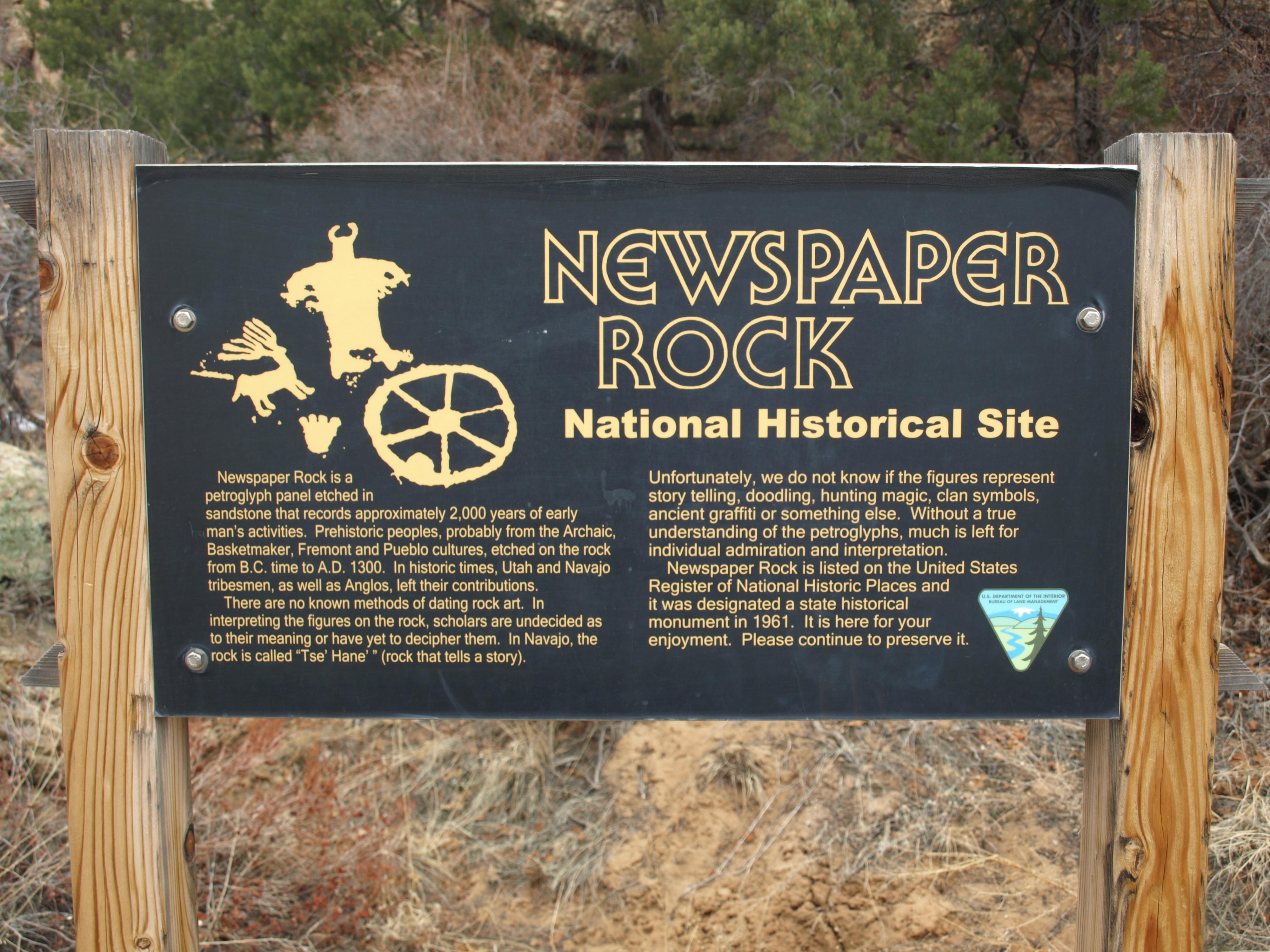
NEWSPAPER ROCK
National Historical Site
Newspaper Rock is a petroglyph panel etched in sandstone that records approximately 2,000 years of early man's activities. Prehistoric peoples, probably from the Archaic, Basketmaker, Fremont and Pueblo cultures, etched on the rock from B.C. time to A.D. 1300. In historic times, Utah and Navajo tribesmen, as well as Anglos, left their contributions.
There are no known methods of dating rock art. In interpreting the figures on the rock, scholars are undecided as to their meaning or have yet to decipher them. In Navajo, the rock is called “Tse’ Hane’” (rock that tells a story).
Unfortunately, we do not know if the figures represent story telling, doodling, hunting magic, clan symbols, ancient graffiti or something else. Without a true understanding of the petroglyphs, much is left for individual admiration and interpretation.
Newspaper Rock is listed on the United States Register of National Historic Places and it was designated a state historical monument in 1961. It is here for your enjoyment. Please continue to preserve it.
Getting There
The two closest towns to the Needles District are Monticello and Moab. Monticello is closer, but Moab is larger and has more services.
From Moab
- From Moab, head South on US-191 S (Main Street).
- Stay on US-191 S for 39.6 miles. Keep an eye out for the junction with UT-211.
- Turn Right onto UT-211 W. This is the scenic road that leads directly into the Canyonlands area.
- Follow UT-211 W for 12.3 miles to the well-signed Newspaper Rock pullout on the right.
From Monticello
- Head North on US-191 N (Main Street) toward Moab.
- Follow US-191 N for 14.4 miles.
- Turn Left onto UT-211 W. You’ll see signs for Canyonlands National Park.
- Follow UT-211 W for 12.3 miles to the well-signed Newspaper Rock pullout on the right.
Route Description
Rock art and historic sites are fragile, non-renewable cultural resources that, once damaged, can never be replaced. To ensure they are protected, please:
- Avoid Touching the Petroglyphs: Look and observe, BUT DO NOT TOUCH!
- Stay on the Trails: Stay on the most used trails when visiting sites, and don't create new trails or trample vegetation.
- Photography and Sketching is Allowed: Do not introduce any foreign substance to enhance the carved and pecked images for photographic or drawing purposes. Altering, defacing, or damaging the petroglyphs is against the law -- even if the damage is unintentional.
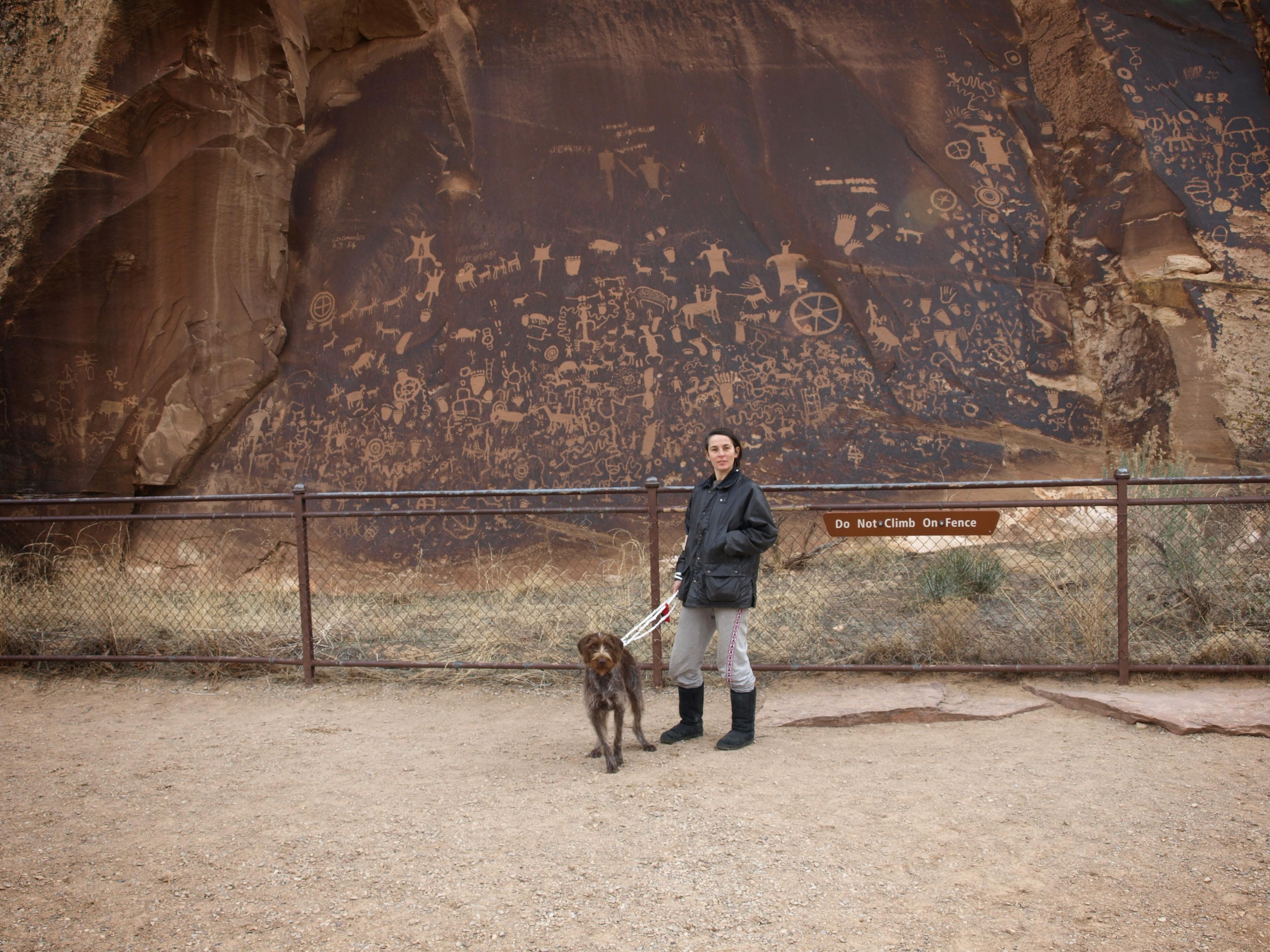
- Pets: Keep pets on a leash and clean up after them.
- Artifacts: If you happen to come across sherds (broken pottery) or lithics (flakes of stone tools), leave them where you see them. Once they are moved or removed, a piece of the past is forever lost.
The panel is visible from the parking area.
Maps
12S 630121E 4205567N
37°59'18"N 109°31'06"W