
 Roadside Attraction
Pictograph Caves
Roadside Attraction
Pictograph Caves
Great Basin National Park
Overview

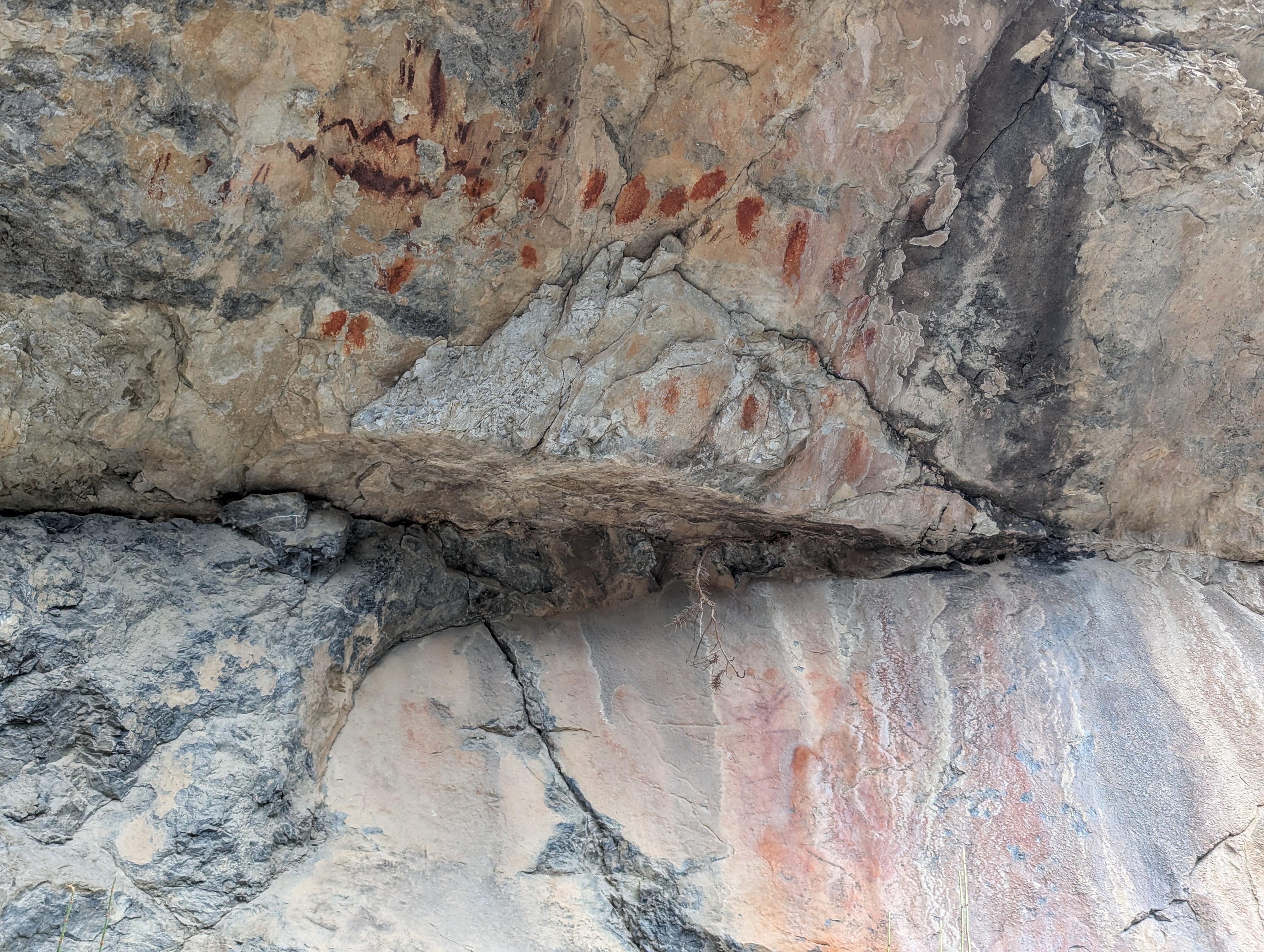
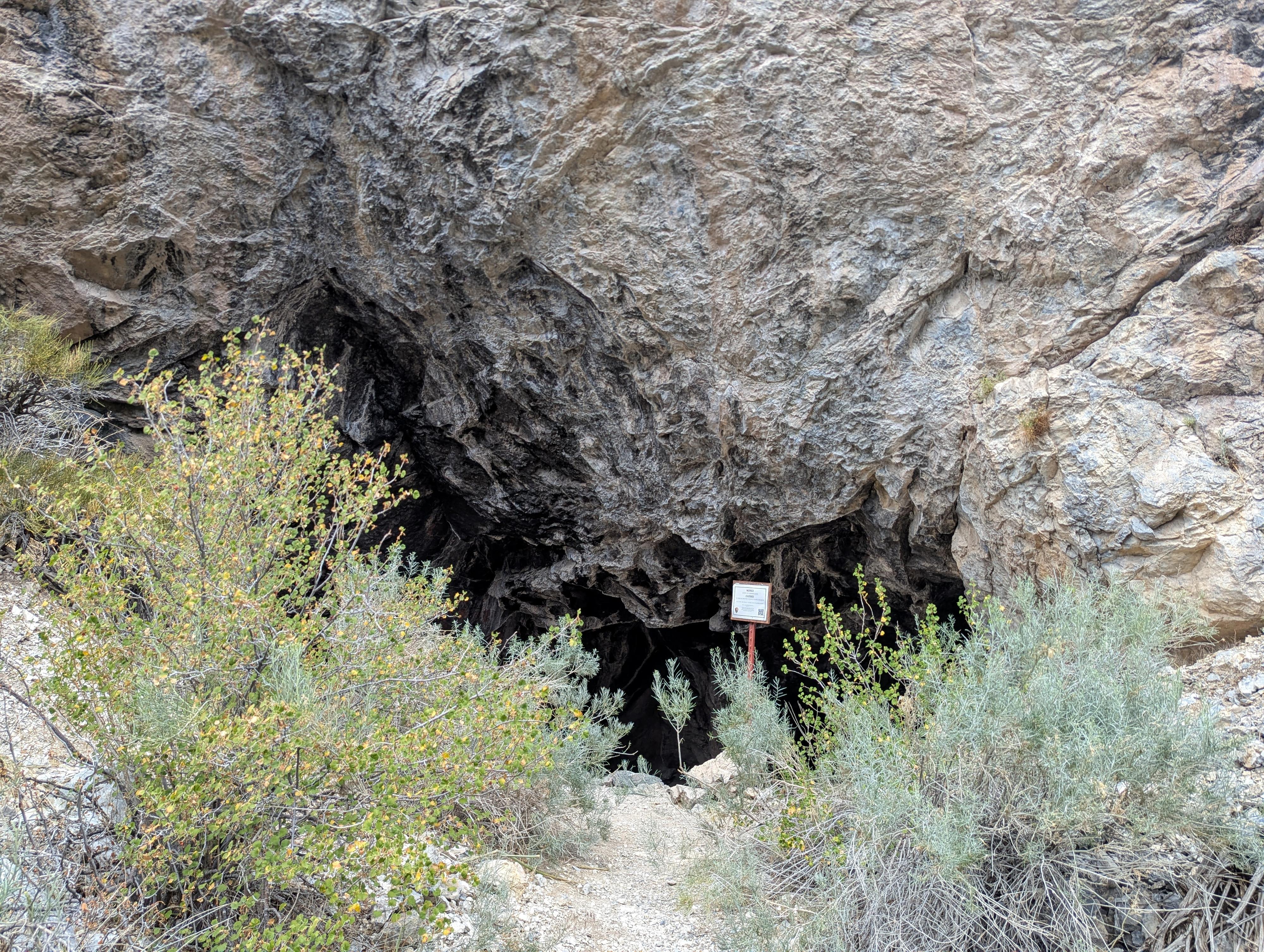
I was surprised to find that Great Basin National Park has pictographs. Given the nearby Baker Archaeological Site, I guess this shouldn't have been surprising. The sites, known as Upper and Lower Pictograph Caves, are small quite stunning. The rock art is at the entrance to deep overhangs/caves. You can visit and view the rock art from a distance but are NOT allowed to go in the overhangs or get close to the panels.
The panels are a gallery of red-pigment pictographs, anthropomorphic figures, native wildlife, and intricate geometric symbols, primarily left by the Fremont culture between 1000 and 1300 CE. The shallow rock shelters probably served as temporary living sites and ceremonial spaces. The location of the shelters, along the creek and below the cliffs, is quite stunning.
In the shelter of Upper Pictograph Cave is a window to the past. Painted on the walls of the cave are pictographs, a type of rock art, resembling people and animals and abstract images. What is this art? Who painted these pictures, and what do they mean? Look for yourself at the images- what do you think they say about the people who created them?
The Artists
The pictographs at Upper Pictograph Cave are believed to have been painted by the Fremont people, a farming and hunting group that lived in the Snake Valley from about 1000 to 1300 AD. The Fremont built several villages including one near present-day Baker, Nevada. What little is known about this culture has been deduced from artifacts and rock art found in their villages and throughout the region.
The Fremont were not the only people to create rock art. Pictographs and petroglyphs exist The Artists throughout the Great Basin and come from many different peoples and times, from the Desert Archaic nomadic groups that came before the Fremont to the Western Shoshone and Paiute peoples who still live in the Great Basin today.
Just down from Upper Pictograph Cave is Lower Pictograph Cave, where other rock art has been found. This art differs from the Fremont style of Upper Pictograph, and is most likely the work of other Great Basin cultures.
The Process
The Fremont created rock art images by cutting into rock surfaces (petroglyphs), and by painting images, usually onto rock (pictographs). Rock was probably chosen as a medium because of its durability, and because of the protection rock shelters provide from weather. The paint the Fremont used had to be durable. Like paint made today, it had three main ingredients that made it long-lasting. First, a pigment, usually inorganic, gave the paint color. One common pigment was the mineral hematite which creates a red color. The Process Next, a binder was added to hold the pigment particles together and to hold the paint onto the rock surface. Some examples of binder ingredients include blood, egg, seed oils, plant resins and juices, milk and honey. The third ingredient of the paint was a vehicle, or a fluid, that made the paint liquid and suitable for application. Plant juices, water, animal oils, and urine have all been used as vehicles.
The Subject
Some of the shapes and patterns that are represented here on these cliff faces have been named by people who study rock art. Figures resembling human form, like those to the far right of the cave entrance , are called anthropomorphs. More specifically, those that are trapezoidal in shape are called Fremont-style anthropomorphs. Those resembling animal forms are called zoomorphs.
While many of the pictographs clearly represent living things, some of the art is more abstractdots and lines drawn on the rock surface with paint or charcoal.
But what do these pictographs mean? What do you think they suggest? No one can say absolutely what the painter had in mind while creating these images. To attach meaning would be to possibly make wrong inferences or conclusions about the images and about the people who made them. We are left, then, to guess for ourselves. Therefore, realize that any meaning we give these paintings is merely speculation, and what they actually represent, if they do, in fact, represent anything, may never be known.
Threats to the Art
Vandals have also used this cave to write over or destroy some of these images. Note the date “1906” next to a drawing of someone wearing a headdress. It is important to understand that the images painted on the rock wall are delicate and care must be taken to protect them. These images are one of the few links we have to the people who came here before us. To allow them to be destroyed would remove the link forever. Please do not touch any pictograph or engage in any activity that might damage them.
More than Pictures
Besides the rock art, artifacts have been found in this cave. During the 1930’s, E.P. Harrington recovered stone artifacts, animal bones, ashes, charcoal, and fire-cracked rocks buried in the floor sediment. These artifacts indicate that the cave was used for more than just a place to paint figures.
Upper Pictograph cave has been used by animals as well as people. Pack rats used this shelter to build their nests or middens, and Townsend’s big-eared bats have been known to use this cave from time to time. These bats are very sensitive to the slightest disruption, so it is essential to not go inside. Instead, enjoy this cave and its special features from the outside, and leave with a better understanding and appreciation of this natural and cultural resource.
Full Details
To help keep the riff-raff out, and encourage participation, you must login to see the details.
Login For Full DetailsRegistration is free and easy.